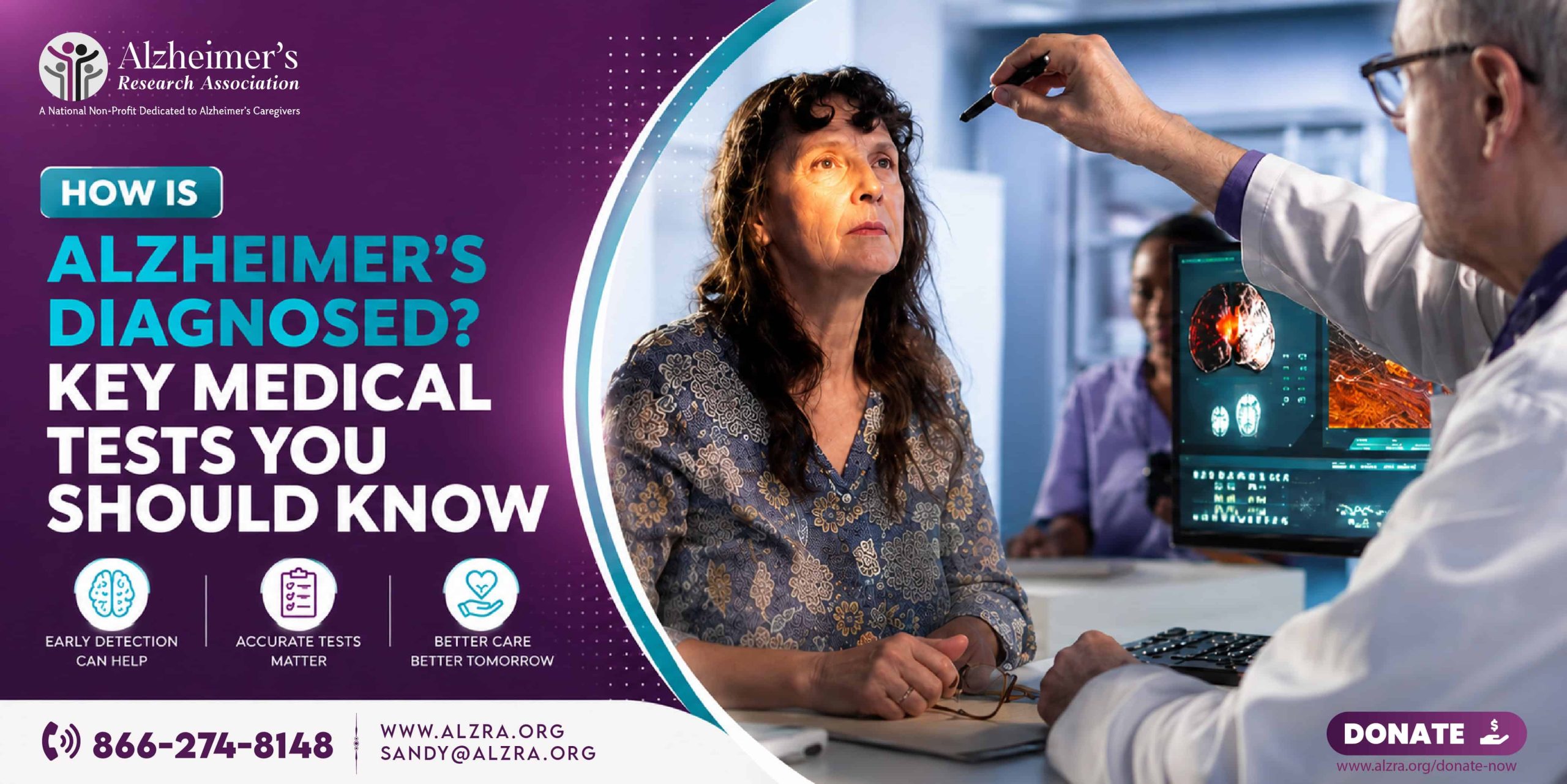
Memory lapses, misplaced items, or occasional confusion are often brushed off as part of normal aging. However, when these changes become more frequent or begin to interfere with daily life, they can raise deeper concerns. This is where understanding Alzheimer’s disease becomes crucial. Early signs are not always obvious, and distinguishing between typical age-related changes and something more serious can be difficult without proper medical guidance.
Receiving a diagnosis for Alzheimer’s is not based on a single test or quick conclusion. Instead, it is a careful, multi-step process that combines clinical expertise with advanced medical testing. For many individuals and families, this journey can feel uncertain and even overwhelming. However, knowing what to expect can ease anxiety and empower better decision-making.
In this blog, we explore the key medical tests used to diagnose Alzheimer’s, explaining how each one contributes to a clearer and more accurate understanding of cognitive health.
Medical Tests for Diagnosing Alzheimer’s Disease
Diagnosing Alzheimer’s involves a combination of medical evaluations designed to assess cognitive function, rule out other conditions, and identify characteristic brain changes. These tests work together to provide a comprehensive and accurate diagnosis.
The following are the key medical tests commonly used in the diagnostic process.
Medical History
The medical professional will begin by reviewing the patient’s medical history as part of the overall diagnostic process. This includes assessing any psychiatric, cognitive, or behavioral changes that may have developed over time. Understanding when symptoms first appeared and how they have progressed is critical in identifying patterns associated with Alzheimer’s.
Furthermore, the physician will assess the individual’s past and current health conditions, lifestyle habits, and any medications they are currently taking, as certain drugs or medical issues can lead to memory problems. A detailed family history is also important, as the doctor may ask about relatives who have experienced dementia or Alzheimer’s disease, helping to assess potential genetic risk.
Cognitive, Functional, and Behavioral Tests
After gathering a patient’s medical history, clinicians conduct specific assessments to evaluate how well the brain is functioning. These evaluations are simple yet effective, allowing doctors to detect subtle changes that might be missed in a standard conversation. They typically measure:
- Memory: Ability to recall words, events, or recent information
- Language skills: Naming objects, forming sentences, and understanding speech
- Attention and concentration: Staying focused on tasks or following instructions
- Problem-solving and reasoning: Handling basic calculations or logical questions
- Orientation: Awareness of time, place, and surroundings
Cognitive Assessment
These assessments target specific brain domains to quantify the extent of impairment. Examples include:
- Mini-Mental State Exam (MMSE): A widely used screening tool that evaluates memory, attention, language, and orientation through a short questionnaire
- Saint Louis University Mental Status (SLUMS): A more detailed screening tool that can detect mild cognitive impairment and early dementia
- Ascertain Dementia 8 (AD8): A brief informant-based questionnaire that captures early changes in memory, judgment, and daily functioning.
- Montreal Cognitive Assessment (MoCA): A sensitive test often used to detect early-stage cognitive decline
- Clock Drawing Test: Assesses visual-spatial skills and executive functioning through a simple drawing task
Functional Assessment
Alzheimer’s affects more than just memory; it impacts a person’s ability to navigate the world. Doctors assess a person’s functional status to understand how effectively they perform daily activities and how symptoms impact their ability to remain independent. Examples of functional assessment include:
- Functional Activities Questionnaire (FAQ): Evaluates the ability to perform complex daily tasks such as handling finances, shopping, and meal preparation
- Activities of Daily Living (ADL): Measures basic self-care abilities such as bathing, dressing, and eating
- Instrumental Activities of Daily Living (IADL): Assesses higher-level functions like managing medications, transportation, and communication
Behavioral and Psychological Assessment
Changes in mood and behavior are often early indicators of Alzheimer’s. Assessing these symptoms provides a more complete understanding of the individual’s condition. Examples of behavioral tests include the following.
- Neuropsychiatric Inventory (NPI): Evaluates symptoms such as depression, anxiety, agitation, and hallucinations
- Geriatric Depression Scale (GDS): Screens for depression, which can sometimes mimic or worsen cognitive symptoms
- Behavioral observation and caregiver interviews: Help identify personality changes, withdrawal, or unusual behaviors
Informant-Based Assessment
In many cases, input from a family member or caregiver is essential, especially when patients may not fully recognize their own symptoms. Examples of informant-based tests are as follows.
- The Informant Questionnaire on Cognitive Decline in the Elderly (IQCODE or s-IQCODE): Gathers observations from someone close to the patient to evaluate changes in memory and thinking over time
- Ascertain Dementia 8 (AD8): Also commonly used as an informant-based tool to detect early cognitive changes.
Computerized Cognitive Tests and Devices
In addition to traditional paper-based evaluations, many healthcare providers now use computerized cognitive tests and digital devices to assess brain function more efficiently and accurately. These tools are especially useful for detecting subtle cognitive changes that may not be immediately visible through standard testing.
Computerized assessments are typically administered on tablets or computers and use interactive tasks to evaluate multiple areas of cognition. They offer several advantages, including standardized administration, objective scoring, and the ability to monitor cognitive changes over time.
The U.S. Food and Drug Administration (FDA) has cleared several digital tools that support cognitive assessment in clinical settings. These include:
- Automated Neuropsychological Assessment Metrics (ANAM): A computerized test battery that evaluates attention, memory, and decision-making
- Cambridge Neuropsychological Test Automated Battery (CANTAB / CANTAB Mobile®): A touchscreen-based tool assessing memory, executive function, and mood
- CognICA: A rapid, app-based assessment that measures processing speed and cognitive performance
- Cognigram: A digital test designed to detect subtle cognitive impairment through memory and attention tasks
- Cognivue (including Cognivue Clarity® and Cognivue Thrive®): FDA-cleared computerized devices that assess multiple cognitive domains such as memory, visuospatial ability, and executive function
- Cognision: A headset-based device that measures brain activity related to cognitive processing using electrical signals
These tools are typically used as adjuncts, meaning they support but do not replace clinical judgment and traditional diagnostic methods.
Neurological Examination
During a neurological examination, the doctor evaluates the patient for signs that may indicate brain disorders apart from Alzheimer’s disease. This step helps rule out other neurological conditions that can also affect memory, thinking, and behavior.
The doctor looks for clinical features that may indicate conditions such as stroke, Parkinson’s disease, brain tumors, or hydrocephalus (fluid accumulation in the brain). These disorders can sometimes present with symptoms similar to dementia, including confusion, cognitive decline, or changes in movement and coordination.
During the exam, the doctor examines:
- Reflexes
- Coordination, muscle tone, and muscle strength
- Eye movements
- Speech and language function
- Sensory responses (touch, pain, and vibration)
A comprehensive neurological assessment identifies the underlying cause of symptoms, allowing for appropriate further testing or imaging recommendations.
Physical Exam and Diagnostic Tests
A thorough evaluation for Alzheimer’s does not rely solely on memory assessments. Doctors also conduct a physical exam and order diagnostic tests to rule out other conditions that may cause similar symptoms. This step ensures that potentially reversible issues such as infections or vitamin deficiencies are not overlooked.
Conditions such as depression, untreated sleep apnea, delirium, medication side effects, thyroid disorders, certain vitamin deficiencies, and excessive alcohol use are common causes of dementia-like symptoms. Unlike Alzheimer’s disease and other progressive dementias, many of these conditions can be treated or even reversed when identified early.
Physical Examination
During the physical exam, doctors assess overall health and look for signs that may indicate underlying medical or neurological conditions. Key components often include:
- Vital signs check: Monitoring blood pressure, heart rate, and temperature to detect systemic issues
- Neurological reflexes: Evaluating reflex responses to assess nervous system function
- Muscle strength and coordination: Identifying weakness, imbalance, or motor abnormalities
- Sensory response: Testing vision, hearing, and touch to rule out sensory impairments affecting cognition
- Balance and gait assessment: Observing walking patterns to detect abnormalities linked to brain or nerve conditions
Diagnostic Tests to Rule Out Other Causes
Since several medical conditions can mimic Alzheimer’s symptoms, doctors use diagnostic tests to exclude alternative explanations. These tests are essential for ensuring an accurate diagnosis.
By eliminating other possible causes, healthcare providers can focus more confidently on identifying Alzheimer’s disease or other forms of dementia.
Common diagnostic tests include:
- Blood tests: Identify vitamin deficiencies (such as vitamin B12), thyroid dysfunction, infections, or metabolic disorders
- Liver and kidney function tests: Detect organ dysfunction that may affect cognitive performance
- Hormonal assessments: Evaluate imbalances that can contribute to memory or mood changes
- Infection screening: Rule out conditions that may impact brain function
- Toxicology screening (if indicated): Detect exposure to substances or medications that may impair cognition
Brain Imaging Tests
Brain imaging plays a crucial role in the diagnostic process for Alzheimer’s disease. While these tests cannot always confirm Alzheimer’s on their own, they help identify structural and functional changes in the brain and rule out other possible causes of cognitive decline, such as tumors, strokes, or injuries.
Doctors may recommend one or more of the following imaging techniques:
- Magnetic Resonance Imaging (MRI): MRI uses strong magnetic fields to produce detailed images of the brain. It helps detect brain shrinkage (atrophy), particularly in areas such as the hippocampus, which is responsible for memory. MRI is also useful for identifying strokes, tumors, or other structural abnormalities.
- Computed Tomography (CT) Scan: A CT scan uses X-rays to create cross-sectional images of the brain. It often helps rule out conditions such as brain tumors, bleeding, or significant structural damage. Although less detailed than MRI, it is faster and more widely available.
- Positron Emission Tomography (PET) Scan: PET scans assess brain function rather than structure. Different types of PET scans can measure:
- Glucose metabolism (FDG-PET): Shows how actively different parts of the brain are using energy (reduced metabolism in specific patterns can often signal Alzheimer’s).
- Amyloid PET imaging: Detects amyloid plaque buildup, a hallmark of Alzheimer’s disease
- Tau PET imaging: Identifies tau protein tangles associated with Alzheimer’s progression
By integrating imaging results with clinical evaluations and lab tests, healthcare providers can gain a more thorough understanding of the patient’s condition and make a precise diagnosis.
Biomarker Testing
Biomarker testing has become an increasingly important component in the diagnosis of Alzheimer’s disease. Unlike traditional assessments that focus on symptoms, biomarker tests provide objective, biological evidence of the disease’s presence in the brain, sometimes even before noticeable cognitive decline occurs.
These tests measure specific biomarkers linked to the accumulation of abnormal proteins, such as amyloid plaques and tau tangles, which are hallmarks of Alzheimer’s disease.
Doctors may use different methods to detect these biomarkers:
- Cerebrospinal Fluid (CSF) Testing: This test involves a lumbar puncture (spinal tap) to collect cerebrospinal fluid. Clinicians analyze the sample to measure levels of amyloid-beta and tau proteins. In Alzheimer’s, amyloid levels typically decrease (due to plaque buildup in the brain), while tau levels increase.
- Blood-Based Biomarker Tests: Recent advancements have enabled the detection of Alzheimer’s-related proteins through blood tests. These tests measure markers such as amyloid-beta and phosphorylated tau (p-tau). Blood-based testing is less invasive and is becoming increasingly useful for early screening and monitoring.
Genetic Testing (When Applicable)
Genetic testing is not a routine part of a standard Alzheimer’s workup. It is primarily considered in cases with a strong family history of the disease or in instances of early-onset symptoms.
While specific genes are linked to a higher risk of developing Alzheimer’s, it is important to distinguish between genes that increase risk and those that cause the disease.
To understand these tests, it helps to know how they are categorized:
- Risk Genes: These genes increase the likelihood of developing the disease but do not guarantee it. The most well-known example is the APOE-ε4 gene. Having one or two copies of this gene increases risk, but many people with the gene never develop Alzheimer’s, and many people without the gene do.
- Deterministic Genes: These are rare genetic mutations (such as those in the APP, PSEN1, or PSEN2 genes) that directly cause early-onset Alzheimer’s. If a person inherits these specific mutations, they are almost certain to develop the disease. These are only found in a very small percentage of cases.
A Holistic Approach to Diagnosis
Diagnosing Alzheimer’s disease is a comprehensive, multi-step approach. Clinicians combine medical history, cognitive and functional assessments, physical and neurological exams, imaging, and laboratory or biomarker tests to build an accurate picture. Each step contributes unique insights, while cognitive tests identify patterns of decline, imaging and biomarkers reveal structural and biological changes in the brain.
This integrated approach also helps distinguish Alzheimer’s from other conditions that may cause similar symptoms, including potentially reversible disorders. Input from caregivers further strengthens the evaluation by providing real-world observations of behavioral and functional changes. Together, these elements enable healthcare providers to make a more accurate diagnosis and develop a personalized care plan tailored to the patient’s needs.
Alzheimer’s Research Association is a non-profit organization dedicated to helping caregivers of Alzheimer’s disease and dementia. We provide the latest information and news about the illness and helpful tips to help caregivers cope with their daily caregiving challenges. We realize the most important thing that a caregiver needs is financial assistance. Therefore, we provide grants to caregivers to ease their financial burden. Caregivers can apply for grants here: Alzheimer’s Grant Application.
You can also help caregivers in their endeavor by donating as much as possible: Donation To Alzheimer’s Research Associations.
References
- Medical Tests for Diagnosing Alzheimer’s. Alzheimer’s Association. https://www.alz.org/alzheimers-dementia/diagnosis/medical_tests. Accessed: 6th May, 2026.
- Tests and scans to diagnose dementia. Alzheimer’s Society. https://www.alzheimers.org.uk/about-dementia/dementia-diagnosis/how-to-get-dementia-diagnosis/tests-and-scans. Accessed: 6th May, 2026.
- Alzheimer’s Disease: Diagnosis and Treatment. Mayo Clinic. https://www.mayoclinic.org/diseases-conditions/alzheimers-disease/diagnosis-treatment/drc-20350453. Updated: 3rd March, 2026. Accessed: 6th May, 2026.
- How Is Alzheimer’s Disease Diagnosed? National Institute on Aging. https://www.nia.nih.gov/health/alzheimers-symptoms-and-diagnosis/how-alzheimers-disease-diagnosed. Reviewed: 8th December, 2022. Accessed: 6th May, 2026.
- Ellison, J. Diagnostic Tests for Alzheimer’s Disease. Alzheimer’s Disease Research. https://www.brightfocus.org/resource/diagnostic-tests-for-alzheimers-disease/. Published Online: 17th August, 2021. Accessed: 6th May, 2026.
- Tests used in diagnosing dementia. Health Direct. https://www.healthdirect.gov.au/tests-used-in-diagnosing-dementia. Accessed: 6th May, 2026.