

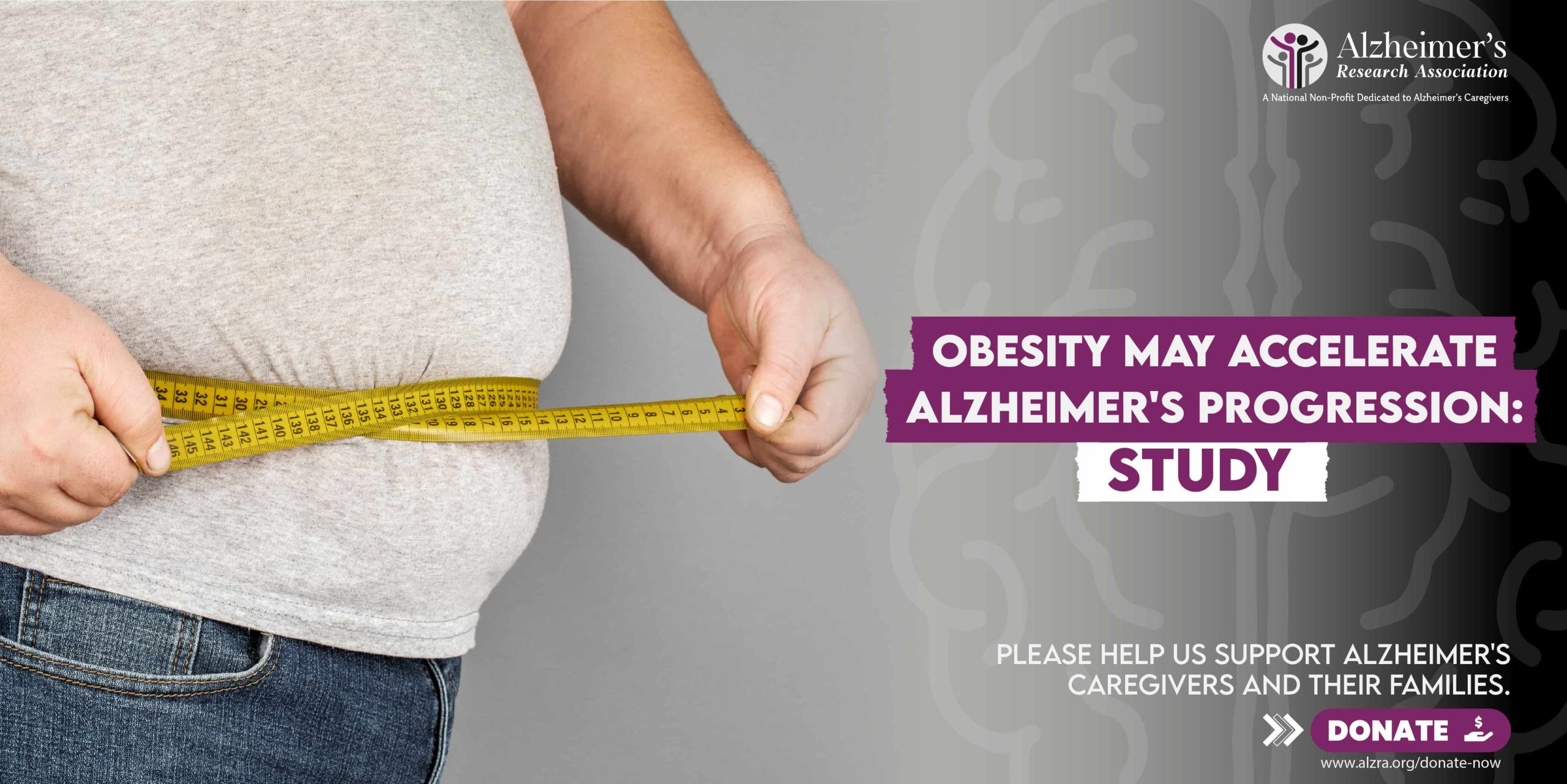
Researchers recently conducted a first-of-its-kind study to assess the effect of obesity on Alzheimer’s blood-based biomarkers (BBMs). In the study, a long-term analysis of BBMs suggested that obesity may exacerbate Alzheimer’s disease-related alterations. According to the findings, BBM levels increased up to 95% faster in obese individuals than in non-obese individuals, suggesting that obesity is associated with a faster accumulation of amyloids and a speedier advancement of Alzheimer’s disease among obese people.
Researchers are increasingly interested in understanding the wide range of factors that contribute to Alzheimer’s disease, a condition shaped by more than age and genetics alone. Metabolic health has become a major focus as scientists explore how conditions such as obesity may influence brain function over time.
In this context, a recent study suggests that obesity may accelerate the development of Alzheimer’s by increasing Alzheimer’s disease-related blood biomarkers, offering new insight into how excess weight could biologically hasten disease processes and elevate dementia risk.
Recently, researchers from Washington University School of Medicine in St. Louis explored this connection between obesity and Alzheimer’s disease and their findings at the annual meeting of the Radiological Society of North America (RSNA) 2025. The journal Alzheimer’s & Dementia: Diagnosis, Assessment & Disease Monitoring also published the findings [1].
By analyzing specific blood biomarkers of Alzheimer’s disease and amyloid PET scans, the researchers discovered that individuals with obesity may have faster amyloid accumulation, which is associated with cognitive decline, and faster increases in Alzheimer’s disease blood biomarkers over time compared to those without obesity.
The study emphasizes the potential link between Alzheimer’s and obesity and opens the door to investigating obesity-related therapies for potentially addressing Alzheimer’s.
About the Study
The study analyzed five years of data from 407 individuals who participated in the Alzheimer’s Disease Neuroimaging Initiative (ADNI), which included both blood samples and amyloid positron emission tomography (PET) scans. PET scans help determine the brain’s amyloid load, which is the accumulation of beta-amyloid protein in the brain as amyloid plaques, a crucial hallmark of Alzheimer’s disease.
Using six top commercial tests, researchers examined 1,228 plasma samples from 407 individuals for several BBMs associated with Alzheimer’s disease, including:
- pTau217 levels – a biomarker used in Alzheimer’s diagnosis and monitoring
- Neurofilament light chain (NfL) – a protein released from damaged or dying neurons
- Plasma glial fibrillary acidic protein (GFAP) – a protein expressed largely in astrocytes (cells that support and safeguard neurons in the brain and spinal cord)
The research team employed statistical techniques to assess a three-way interaction between baseline obesity, time, and BBMs as well as the relationship between these BBMs and body mass index (BMI). Additionally, they verified and compared the BBM results with the amyloid PET scan data.
Linking Body Weight to Brain Biomarkers: Obesity Speeds Up Alzheimer’s-Related Changes
Overall, there were no noteworthy differences in the prevalence of cognitive impairment between the obesity and non-obesity groups at baseline. However, there were more people with high amyloid levels in the non-obesity group than in the obesity group.
Researchers investigated the relationship between blood biomarkers, amyloid levels, and obesity, both at baseline and over time.
In fact, at baseline, obesity was linked to lower levels of pertinent blood biomarkers and reduced amyloid load on PET scans. Researchers adjusted for age, sex, and years of education in this model.
However, after looking at the data over time, the change became apparent. Participants with obesity showed faster increases in plasma levels of a protein called p-tau217 and the ratio of this protein, as well as higher long-term plasma neurofilament light chain (NfL) levels. NFL protein can indicate damage to the links between neurons known as axons.
Overall, the obese group experienced a faster increase in NfL levels. Lastly, based on data from PET scans, researchers also observed a quicker rise in amyloid accumulation in obese people.
Over time, Alzheimer’s disease BBMs and brain PET scans revealed that those with obesity had a higher accumulation of Alzheimer’s disease-related changes than those without obesity. Plasma pTau217 ratio levels rose 29% to 95% more quickly in obese individuals. Furthermore, baseline obesity was associated with a 24% faster increase in plasma NfL and a 3.7% faster increase in amyloid formation.
Researchers found that obesity did not significantly affect changes in plasma glial fibrillary acidic protein (GFAP) levels over time.
According to the study author, Soheil Mohammadi, these results show that obesity is associated with a faster rate of increase in Alzheimer’s disease-related blood biomarkers (BBMs) and amyloid PET burden over time. Still, this effect is not evident at baseline, probably due to dilution effects related to larger blood volume in individuals with obesity [2].
Limitations and Future Prospects
Despite its value, this research has a few limitations. For starters, due to researchers analyzing data from this group, the limitations of the ADNI may have affected the study.
Most participants provided relevant observations from three timepoints. Therefore, data spanning longer timeframes with additional datapoints may be beneficial.
Researchers only controlled for specific aspects in their statistical study; thus, it’s likely that they overlooked relevant covariates that could have influenced the results.
Since more than 90% of the participants were white, the findings may not be generalized to other demographics.
This research also focused on obesity in later life; thus, future research could explore midlife obesity.
The body mass index (BMI) of the individuals was used to determine obesity; although this can be a sign of obesity, it is merely an estimate with limitations [3]. BMI can also fluctuate, and the researchers only had baseline data on it.
Researchers pointed out that baseline BMI alone may not “adequately reflect the dynamic nature of obesity.” They also emphasized that this problem may increase the risk of reverse causation, regression to the mean, or other issues, as disease-related weight loss may alter results.
Some weight loss and other issues may make it more challenging to evaluate biomarker levels in the light of obesity and weight changes.
The researchers recognize that specific illnesses, such as chronic kidney disease, may have impacted the levels of several biomarkers. Therefore, collecting data on chronic kidney illness will be helpful in future studies in this field.
Lastly, two authors declared conflicts of interest. When evaluating the study’s outcomes, it is also crucial to analyze ADNI’s funding and the resources used, such as the biomarker analysis methodologies.
Alzheimer’s Research Association is a non-profit organization dedicated to helping caregivers of Alzheimer’s disease and dementia. We provide the latest information and news about the illness and helpful tips to help caregivers cope with their daily caregiving challenges. We realize the most important thing that a caregiver needs is financial assistance. Therefore, we provide grants to caregivers to ease their financial burden. Caregivers can apply for grants here: Alzheimer’s Grant Application.
You can also help caregivers in their endeavor by donating as much as possible: Donation To Alzheimer’s Research Associations.
References
- Mohammadi, S., Rahmani, F., Dolatshahi, M., Schindler, S.E., Raji, C.A. and ADNI Collaborators, 2025. Effects of obesity on plasma biomarker and amyloid PET trajectories in Alzheimer’s disease. Alzheimer’s & Dementia: Diagnosis, Assessment & Disease Monitoring, 17(3), p.e70143.
- Freeborn, J. Obesity may hasten Alzheimer’s development, study says. Medical News Today. https://www.medicalnewstoday.com/articles/obesity-may-hasten-alzheimers-disease-development. Published Online: 6th December, 2025. Accessed: 6th January, 2026.
- Find Your Body Mass Index (BMI). American Cancer Society. https://www.cancer.org/cancer/risk-prevention/diet-physical-activity/body-weight-and-cancer-risk/body-mass-index-bmi-calculator.html. Accessed: 6th January, 2026.
- Blood tests reveal obesity rapidly accelerates Alzheimer’s progression. Science Daily. https://www.sciencedaily.com/releases/2025/12/251210092019.htm. Published Online: 10th December, 2025. Accessed: 6th January, 2026.
- Blood Test Shows Obesity Speeds Alzheimer’s Development. Radiological Society of North America (RSNA). RSNA Press Release. https://www.rsna.org/media/press/2025/2624. Published Online: 2nd December, 2025. Accessed: 6th January, 2026.
- Obesity Speeds Alzheimer’s Biomarker by Up to 95 Percent. Neurosciencenews.com. https://neurosciencenews.com/obesity-alzheimers-biomarkers-30003/. Published Online: 2nd December, 2025. Accessed: 6th January, 2026.

